
Saving Wisconsin's bats
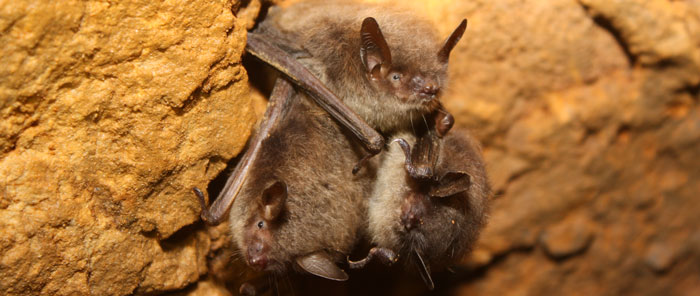
Bats are a vital part of many ecosystems. Bats are major consumers of agricultural and forest pests, and predators of biting insects. Bats also play an important role in reducing risks of insect-borne diseases such as the West Nile Virus. Cave bat populations in Wisconsin have been in rapid decline since 2014 due to the discovery of a devastating fungal disease that causes extensive mortality in cave-dwelling bats.
The fungal disease was first discovered in New York in 2006, has spread across the U.S. and reached Wisconsin in 2014. The fungal disease, known as white-nose syndrome (WNS), has caused the most precipitous decline of North American wildlife in recorded history. Since it was discovered, WNS has affected many species of cave-hibernating bats in the U.S. and Canada, causing declines approaching 100% in some populations. The WNS poses a severe threat to all four of Wisconsin’s cave bat species: big brown bat, little brown bat, northern long-eared bat and tricolored bat.
- Subscribe to receive Bat Program updates
Stay on top of the latest research, follow the progress of Wisconsin's bat monitors and get the dates of our next bat festival. News and events are directed to your inbox from the Wisconsin Bat Program.
White-nose syndrome
White-nose syndrome (WNS) is a devastating disease of hibernating bats that has caused the most precipitous decline of North American wildlife in recorded history. It is caused by the fungus Pseudogymnoascus destructans and is rapidly spreading through cave bat populations across the country causing unprecedented mortality.
Since it was first discovered in 2006, WNS has affected eleven cave-hibernating bats, including four endangered species and subspecies of insect-eating bats in the eastern and southern U.S., causing declines approaching 100% in some populations. Recent estimates suggest 5.7-6.7 million bats have died over the past seven years. This syndrome poses a severe threat to all four of Wisconsin's cave bat species.
Background
In February 2006, some 40 miles west of Albany, New York, a caver photographed hibernating bats with an unusual white substance on their muzzles. He noticed several dead bats. The following winter, bats behaving erratically, bats with white noses and a few hundred dead bats in several caves came to the attention of New York biologists, who documented white-nose syndrome in January 2007. Named after the distinctive white growth that appears on the nose and wings of affected bats, WNS reached Wisconsin in the spring of 2014.
Help protect bats from WNS
Printable brochure about how you can help Wisconsin's bats. Help Protect Bats!
Why we should care
Bats are a vital part of many ecosystems and the white-nose syndrome has significant environmental, economic and public health implications. Insectivorous bats consume large numbers of agricultural pests, which cost farmers and foresters billions of dollars yearly. Bats play an important role in sustaining many unique and fragile cave ecosystems.
For example, bats are the primary source of nutrients in many cave systems, and many cave-obligate species depend on such input for survival. Thus, the loss or significant reduction of bat populations from caves could have cascading effects that impact the status of many other cave species.
Bats of Wisconsin
Of the eight species recorded in Wisconsin, the four cave-dwelling bats are listed as threatened - big brown, little brown, northern long-eared and tricolored -- while four others are on our "watch" list.
Get involved
Volunteer opportunities
There are many volunteer opportunities available to the public. For details, please visit the Wisconsin Bat Monitoring Program [exit DNR].
How you can help
Build a bat house
Watch a video and learn how you can build your own bat house.
Wisconsin Bat Conservation Society
You can donate directly to the Wisconsin Bat Conservation Society, an annual membership where groups and citizens can support bat projects in need of immediate funding. These funds will be used for white-nose syndrome (WNS) research, landowner support in WNS prevention and control, surveillance, inventory, monitoring, applied management and education about the benefits of bats.
Make your check payable to the "Wisconsin DNR" and send your tax-deductible donations to:
- Wisconsin Bat Conservation Society
Department of Natural Resources
Bureau of Natural Heritage Conservation
PO Box 7921
Madison WI 53707-7921
Please be sure to note "WI Bat Conservation Society" on the memo line of your check.