
Molybdenum In Groundwater
Molybdenum (Mo) is a metallic element that is naturally present, usually at low levels, in the earth's crust. Trace amounts of molybdenum are necessary for human health and are obtained from common foods in the diet such as leafy vegetables, legumes, grains and organ meats. Higher concentrations have been found in soil or groundwater, typically in conjunction with spills or some historic waste disposal practices. Residents are advised to avoid the extremely low risk associated with future molybdenum exposures by not consuming water that contains molybdenum above the Wisconsin health advisory level of 90 micrograms per liter (μg/L). Naturally-occurring levels of molybdenum in groundwater are low; U.S. Geologic Survey found a median value of 1 μg/L nationwide. Most well owners do not need to include molybdenum during annual well testing.
Molybdenum In Southeast Wisconsin
Molybdenum concentrations above the state health advisory level were found in monitoring wells and private water supply wells in southeast Wisconsin. A two-year DNR study was unable to determine the origin of the elevated levels of molybdenum.
- Caledonia Groundwater Molybdenum Investigation (WA-1625)
- Summary of the DNR's Molybdenum and Boron Investigation (WA-1640)
Who Should Test
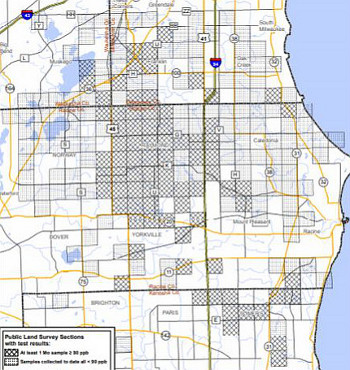
The DNR, along with the state Department of Health Services (DHS) and local health officials, recommend that residents using private wells in sections with molybdenum results at 90 or greater and adjacent sections should sample and test their well water for molybdenum. This testing can be done along with recommended annual testing for bacteria and nitrates. Testing cost ranges from $13 to $45.
Testing your well water
Contact a certified laboratory that can test your water for a specific contaminant.
How To Properly Collect A Water Sample
The laboratory you work through will provide you with a water sampling kit. The video below is demonstration showing basic methods for properly collecting a water sample to yield accurate results.
Health Information
Staff at DHS completed a comprehensive review of molybdenum health studies. If you have molybdenum in your drinking water, this information can help you decide whether you need to seek an alternative supply of drinking water.
Water Treatment Devices
The Department of Safety and Professional Services (DSPS) has approved water treatment devices for molybdenum and boron. The total device cost ranges from $400 to $1000, depending on model and labor.
To access the DSPS list of water treatment devices go to https://esla.force.com/publiclookup, from the search dropdown, select products; then from the type of product dropdown, choose plumbing products and from the select product description dropdown, choose water treatment device.
A licensed pump installer, well driller or similar water industry professional should be hired to correctly install an appropriate treatment device.
Contacts
| Molybdenum in southeast Wisconsin | Jesse Jensen 414-263-8774 |
| Drinking water, wells and well testing | Greg Roanhouse 262-884-2356 |
| Caledonia Groundwater Molybdenum Investigation | Joe Lourigan 608-267-9386 |
| Molybdenum health issues | Sarah Yang Dept. of Health Services (DHS) 608-266-9337 |
| Molybdenum treatment | Glen Schlueter Dept. of Safety & Professional Services (DSPS) 608-267-1401 |